
Training
Cardiac rhythm training with SimVS Telemetry
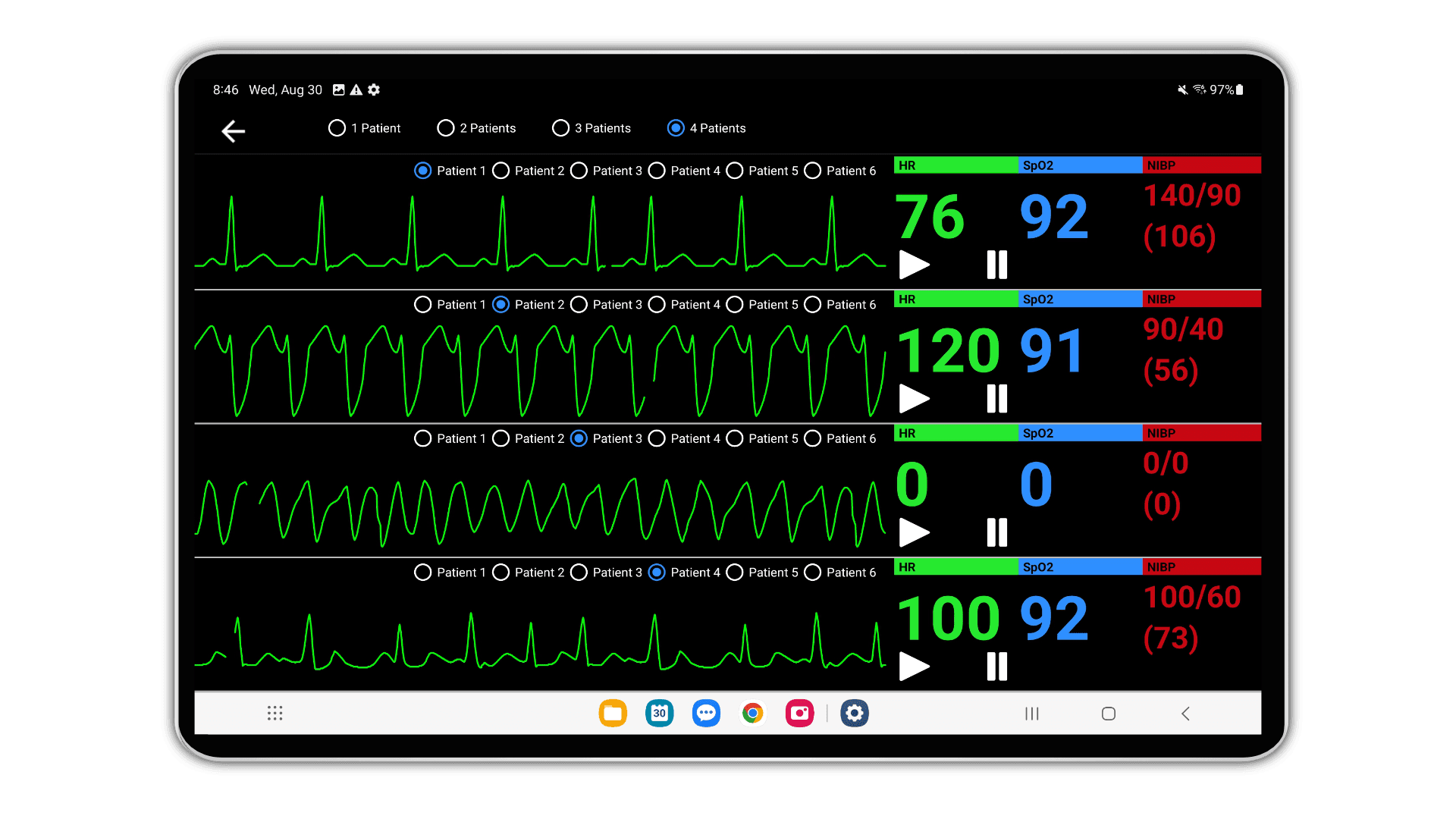
Six rhythms on screen at once, controlled from one instructor tablet — much closer to what a telemetry display actually looks like on a floor.
Why rhythm interpretation is hard to teach
Interpreting cardiac rhythms accurately is a core skill for diagnosing and managing patients with cardiac conditions. Teaching it usually relies on textbooks, static images, and limited hands-on practice, which leaves gaps in both understanding and confidence.
Static learning materials: Textbooks and still images cannot capture the dynamic nature of cardiac rhythms and their variations.
Limited hands-on practice: Students often lack sufficient exposure to a range of rhythms in a safe, controlled environment.
No real-time feedback: Traditional methods do not simulate the physiological changes that accompany a cardiac event as they happen.
What SimVS Telemetry adds
Dynamic simulation: Students watch ECG waveforms change in real time, which builds an understanding of how rhythms present clinically.
A library of rhythms: An extensive rhythm library, including rare and complex arrhythmias.
Interactive teaching: The tablet format supports 1:1, small group, and full classroom teaching from a single instructor device.
How the Telemetry app works
The SimVS Telemetry app projects up to six cardiac rhythms from the library at once.
- Multiple monitors can run at once to increase the number of patients displayed
- Connects to projectors or large screens with the included connectors
- Rhythms can sit side by side so learners can compare and contrast them
- Pause and restart for closer analysis
- Controlled from one instructor tablet
Where it is included
SimVS Telemetry ships with the SimVS Hospital, Hospital Plus, Hospital Pro, and Hospital Ultimate packages.
Compare the Hospital Series packagesConclusion
Rhythm recognition improves with exposure and repetition. A dynamic display, a broad rhythm library, and the ability to put two rhythms next to each other give instructors a practical way to deliver both.