
Training
IV infusion training with SimVS-IV
What changes when the pump is software: more interfaces, fewer repairs, and a record of what the student actually did.
Why IV infusion training is hard to resource
IV infusion covers medications, fluids, and blood products, and getting it right matters for patient safety. Most programs teach it on refurbished pumps, which brings its own set of problems.
Limited functionality: Refurbished pumps may lack features of current infusion devices, which narrows what you can teach.
Performance and maintenance: Older equipment suffers reliability issues and often requires outside service.
No real-time feedback: A physical pump does not report what the student did, or when.
No simulation integration: As programs integrate the parts of a simulation, standalone pumps remain difficult to work with.
What SimVS-IV does differently
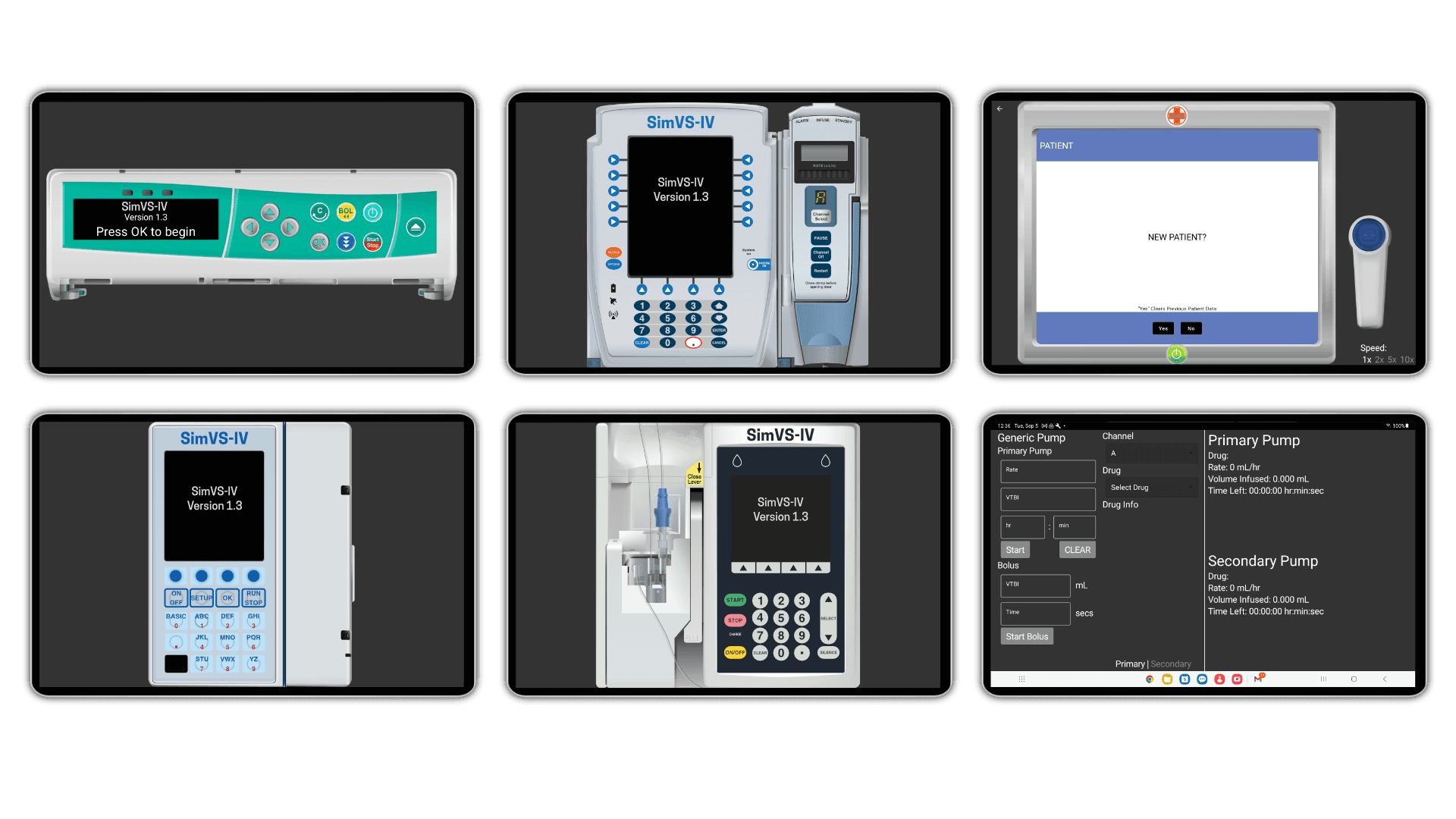
Versatility: SimVS-IV replicates four of the most common pump models, so students see more than one interface.
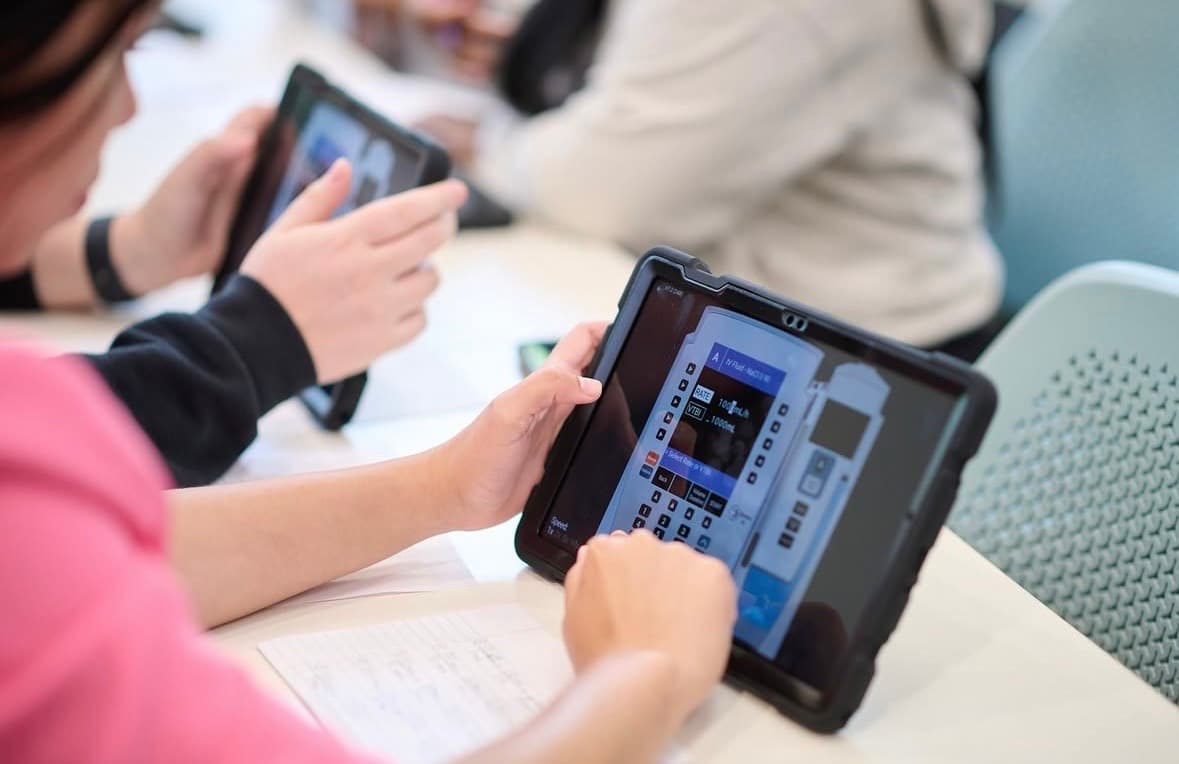
Tablet-based: Used in the classroom, the skills lab, simulation, and online.
Updates for supported systems: Pump models stay current and the library of available models continues to grow.
Real-time feedback: Time stamps of student actions give faculty something specific to debrief against.
Simulation integration: Control and monitor 15+ monitor types from the instructor interface for a cohesive patient simulation.
Customization: Drug libraries, care areas, and medication orders are fully customizable.
Conclusion
A software pump is not a clinical device and it does not replace time on a real floor. What it does is make repetition affordable, put more than one interface in front of every student, and give faculty a record to debrief from.